
Meet Jordan Downs, SBTHP's New Director of Visitor Experience
By Kevin McGarry, Associate Director for Public Engagement
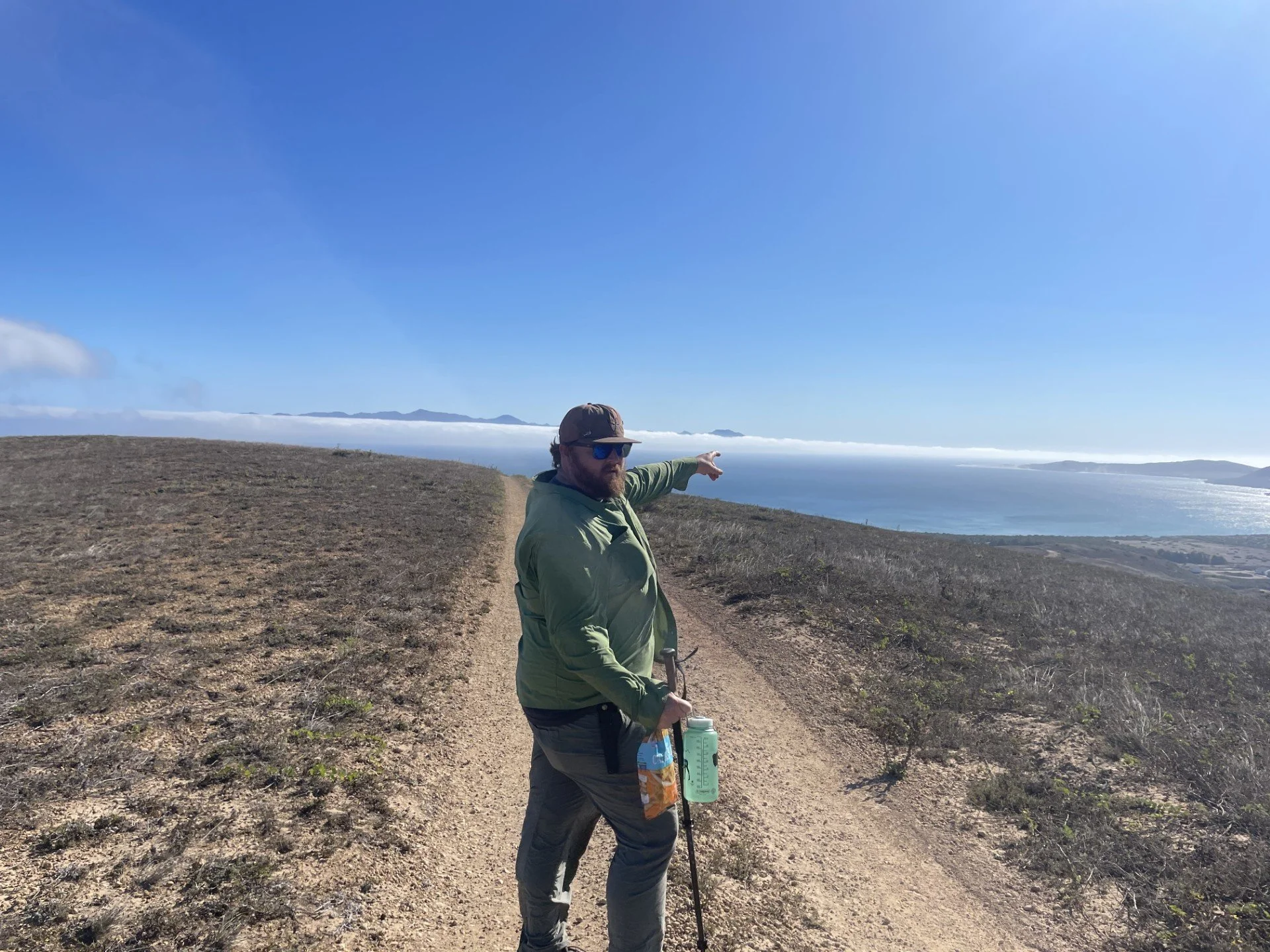
(PHOTO 1.0: Jordan Downs loves to visit the Channel Islands. Here he is on Santa Rosa Island, hiking back from Lobo Canyon.)
Jordan Downs, Ph.D. joined the Santa Barbara Trust For Historic Preservation (SBTHP) team in early August 2026. In his role as Director of Visitor Experience, Jordan oversees the overall day-to-day operations at El Presidio de Santa Bárbara State Historic Park and Casa de la Guerra, including visitor orientation, experiences and activities, and merchandising and sales for our museum gift shops. He is also responsible for the training, scheduling, and day-to-day management of our talented Visitor Experience team.
Born and raised in Santa Barbara, Jordan studied history at UC Santa Barbara and went on to acquire advanced history degrees at the University of Birmingham and UC Riverside. He brings to his new role over ten years of experience as an educator and historian. Jordan’s additional mix of curatorial and retail management experience, as well as his enthusiasm and passion for creating inclusive, welcoming educational spaces and finding meaningful ways to increase public connection to our local history, makes him a great fit for leading SBTHP’s Visitor Experience department.
Tell us a little about yourself and your upbringing/family.
We’re no strangers to strange names, being descendants of William Brewster, chaplain on the Mayflower. He named his children Love and Wrestling, respectively. Our kiddos, Oliver and Jack, narrowly escaped the prophetic appellatives of Endymion and Stranger. Being born on Superbowl Sunday, my father tried to name me “Touch.” Fortunately, none of these names stuck. On my partner Meghan’s side, the family goes back seven generations to the Smith brothers and family of Serena, with a family deed that reads “Bull Run [Toro] Canyon.”
What did you do professionally before joining the SBTHP team?
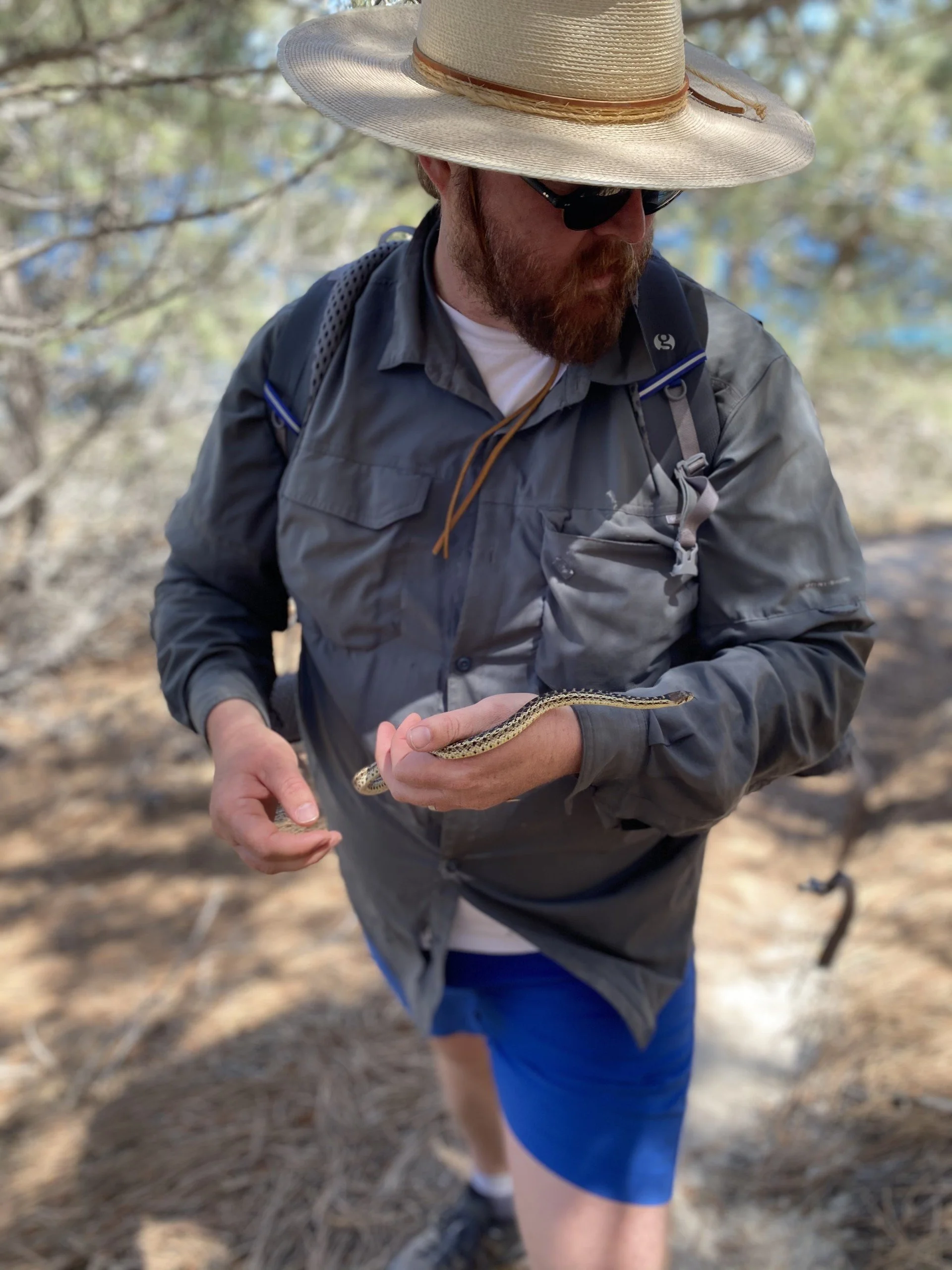
(PHOTO 2.0: Jordan in Torrey Pine Grove on Santa Rosa Island, holding an endemic Santa Cruz Island Gopher Snake.
I was (and always will be) an archive rat. Ten years of sifting through archival materials – British Library, London Archives, Huntington Library, etc. – saw through my first book, Civil War London, a deep dive into popular metropolitan mobilization in the early 1640s. Another book is in the works. Teaching was equally consuming with stints at Vanderbilt University and UC Riverside, institutions where I offered courses on subjects ranging from the History of Common Law to the Golden Age of Piracy.
Tell us why you chose to work at SBTHP?
The Irony isn’t lost on me: with an office in the former butler’s pantry (added in 1948) of the Cañedo Adobe, a well-lived space attached to the last Spanish fort built in North America, I am afforded an opportunity to finally make amends. Having spent much of my career considering exactly how the English framed their prejudices against the Spanish, I now get to do the opposite: I get to share with the public the incredibly layered, diverse, and ever-evolving history of this little but important slice of California.
What do you enjoy most about the role and what projects are you working on now?
Not unlike its archaeology, this is a neighborhood written in strata: it’s Chumash, it’s Spanish, it’s Mexican, it’s Yankee (from the Dutch nickname Jan Kaas, or John Cheese — look it up), it’s Chinese American, it’s Japanese American — it’s really all of the above and more. To simply call this place "layered" fails to capture fully its dynamism and diversity. Ergo, I’m most excited about how we can interpret and share with the public about these physical spaces and how these diverse histories intersect.
Tell us something interesting about yourself we would never guess...
I talk to birds. It can be problematic – just ask Meghan about the time in Wyoming when I got a ticket for spotting a Killdeer. If not embarrassing for my next of kin, it is simply a means to be closer to the oldest inhabitants of this land, migratory or otherwise. Have you ever seen a Hooded Oriole in the spring, or a Townsend’s Warbler during fall migration? Have you ever seen either while listening to the Dead's scorching Morning Dew from February 27, 1977, at Robertson Gymnasium, UCSB? Let me know when you do. Therein lies proof that dinosaurs still exist and that we still have time.